做你自己,其他人都已經有人做了。
— 作者:Oscar Wilde。
這是我的新網誌的第一篇文章。我剛開始經營這個新的網誌,敬請期待更多內容。請於下方訂閱,以便你在新內容發佈時收到通知。
做你自己,其他人都已經有人做了。
— 作者:Oscar Wilde。
這是我的新網誌的第一篇文章。我剛開始經營這個新的網誌,敬請期待更多內容。請於下方訂閱,以便你在新內容發佈時收到通知。
Drawing on the study of digital business module course, I have gained much knowledge on the use of digital technology on business and how it would affect the community.
In today’s age, digital business becomes part of people’s daily life, as well as e-commerce, play an essential role in digital marketing. E-commerce can be defined as buying and selling activity between businesses and consumers on the internet. By comparing the traditional marketing strategy to e-commerce, e-commerce provides more convenience and flexible service. For example, online website delivers information quickly from businesses to consumers; the information could be view by anyone around the world with digital devices. Moreover, digital marketing also closed the gap between businesses and the public. In the past, it is hard for businesses to communicate with the public whereas nowadays they can easily communicate and participate in companies’ social media accounts. Thus, companies could produce products that consumers prefer. AI and VR are two of the latest technology, AI helps the businesses to do big data calculation and simulation, while VR allows consumers to have a better understanding of the products. Although these technologies provide us with significant benefits, there are still many concerns follows. One of the major issues for e-commerce is the difficulties to control everything on the internet. Cyber-attacks and information leaks are the most common problems in digital business because the security is not appropriately maintained or cybercriminals crack the firewall.
While the companies focus on the development of e-business, they should take care of the social communities and seek for the sustainability of the environment. According to one of the articles from weekly reading “The circulate economy”, it inspires me that none of the resources is unlimited. Therefore, businesses should develop products that can be recycled and reused to reduce the waste and pollution human made and consumers should encourage themselves to purchase green and ethical products to make the world less polluted.
Having to learn the knowledge from this module help me to get on track with the digital business world, especially in digital marketing. This module helps me to understand digital marketing strategy and the weekly article allows me to understand the current situation of the digital business world. I have always been interested in digital marketing and I am looking forward to working in the digital marketing field.

https://images.app.goo.gl/uJcdZG8392Ne5jBD7
Nike is one of the largest athletic apparel brands in the world. The Nike store owns more than a thousand brick and mortar stores across the globe. However, a significant driver of Nike’s commercial success is its digital business model, which encourages consumers to purchase products through its online store. Nike’s digital business model has been widely successful because the corporation uses a targeted advertising strategy that helps expose the company’s advertisement campaign to the right consumers. For example, on social media platforms such as Instagram, Nike has an astoundingly high number of 82.6 million followers (Cole, 2018). Nike artfully posts photos of well-known athletes wearing Nike products, which is then exposed to 82.6 million followers that enjoy Nike products, hence their willingness to follow (Cole, 2018). By investing and focusing on social media platforms, Nike has been able to access and direct content towards potential consumers that are more likely to buy Nike products than advertising to untargeted audiences (Cole, 2018). In comparison, Nike’s competitor Adidas has only garnered 22.9 million followers on its Instagram page. As a result, Adidas likely won’t have as far of a reach to potential consumers. Meanwhile, Nike’s incorporation of social media in its business model strategy demonstrates an integrated marketing scheme where Nike can engage and communicate with targeted audiences who enjoy Nike products and are interested enough to follow the brand.
https://images.app.goo.gl/k3YFLPkuYPD4gN846
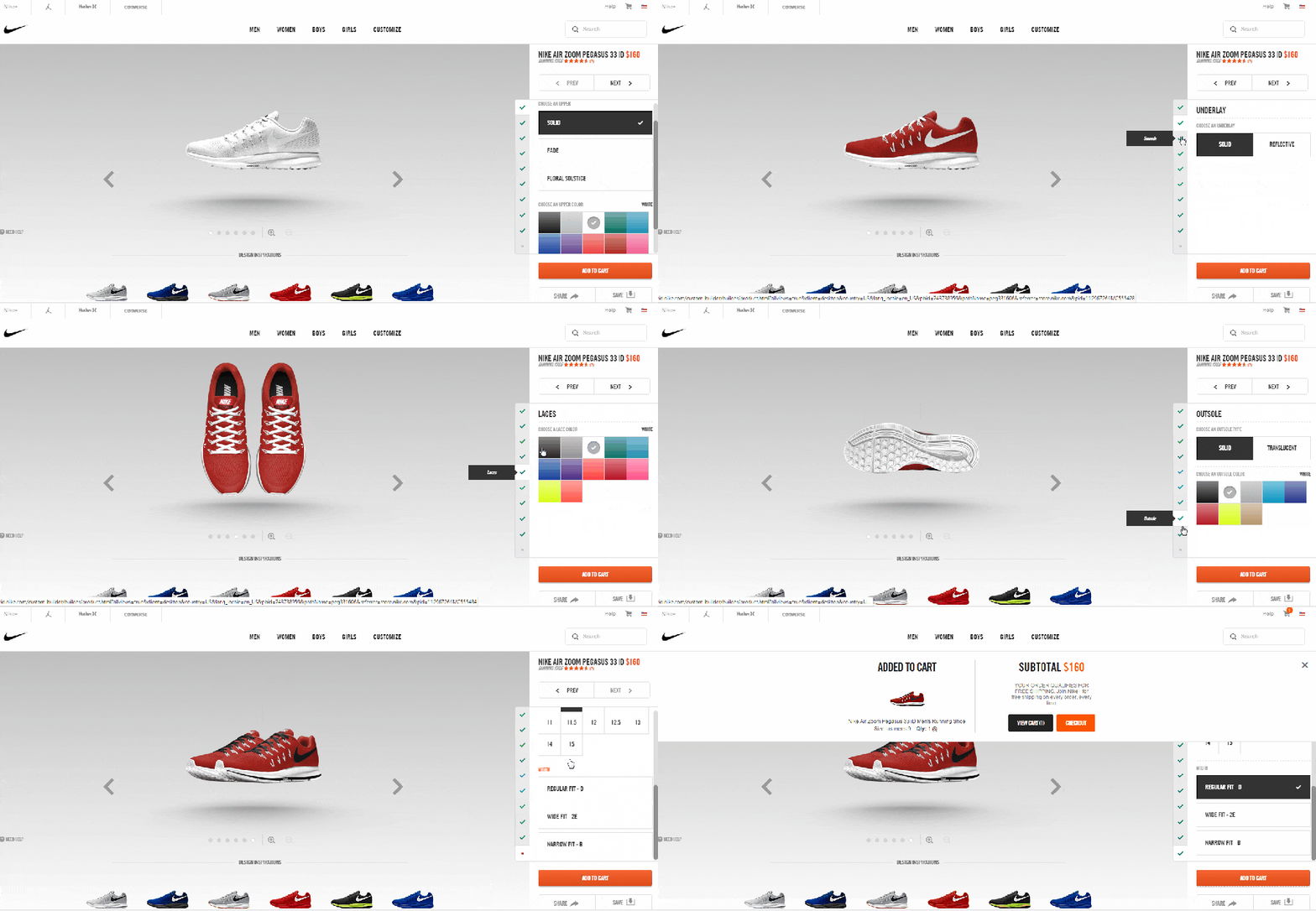
Nike has also integrated digital technology to move its brick-and-mortar business strategies to the online sphere. In the early 2000s, Nike began to sell customized shoes that allowed customers to design a pair of Nike sneakers to their preference. With the use of Nike’s online retail store, the brand has moved its customization promotion from paper-based to digital (Tannou & Westerman, n.d.). Hence, consumers have more accessibility and customizable choices than ever to design their products digitally. The move towards a digital based designing process helped promote the product to young consumers who are able to design a pair of sneakers with 3D design tools that offered more design capabilities and allowed the consumer to have a better visual of what the real product would look like (Tannou & Westerman, n.d.).
<Insert Video> https://www.youtube.com/watch?v=zsuxRGLIjss
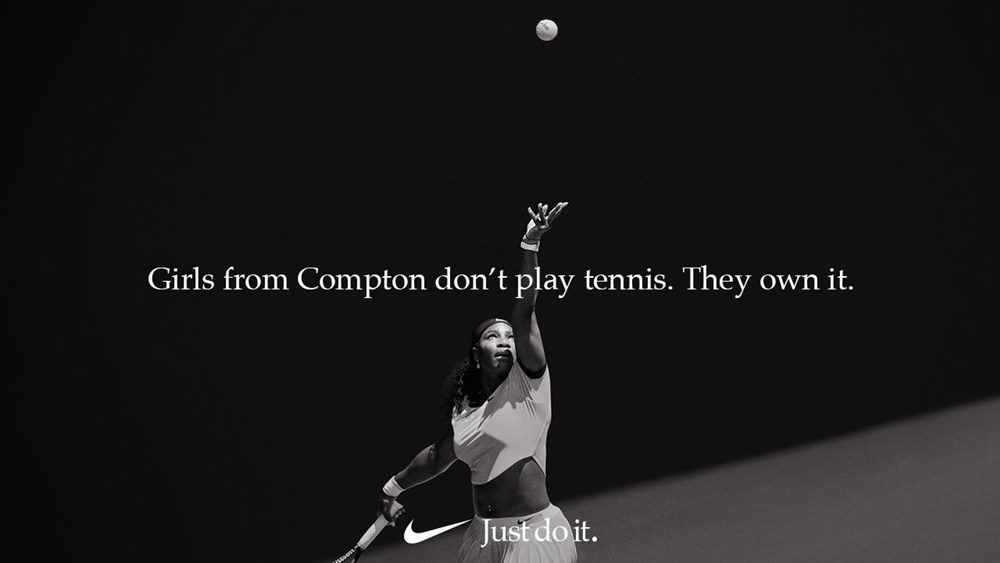
Targeting the audience through social media and integrating seamless online shopping tools compounds, Nike’s success compounded in the company’s use of integrated marketing communication strategies. For example, Nike frequently garners attention and high exposure by campaigning viral advertisement videos on social media platforms, such as YouTube. From Nike’s (2019) most viewed videos, “Just Do It: Tiempo De Ser Héroes | Nike," the video showcases young athletes creating legacies with the help of Nike apparels. The video ends with its artful slogan, ‘Just Do It,’ which reflects on the concept of pushing oneself to their limits (Nike, 2019). To date, the video has garnered 37 million views around the world. The video content projects an inspirational message that is viewed by millions of potential consumers who are able to associate the video’s message to the brand’s core values. Hence, consumers who resonate with the sentiments are encouraged to purchase Nike products. Meanwhile, Nike’s digital business model of integrating marketing communication is effective in contributing to the company’s success because digital platforms further elevate the company’s brand reputation. With 37 million views from a single advertisement, Nike established itself as a relevant brand in today’s age and trend. Hence, the high views and positive response contributes to the company’s image of legitimacy and encourages social engagement between viewers. As a result, Nike opens up a portal of two-way engagement with the consumers.
https://images.app.goo.gl/xAZLLcqkgvYU1NB79
Nike further uses its digital business model to integrate marketing communication brand strategies, such as celebrity endorsements. In the pre-digital era, celebrity endorsements would consist of celebrity athletes wearing brand apparel to major events or games. Consumers are engaged with celebrity sponsors through traditional media, such as print news and television. Thus, the communication pathway was relatively one-sided. However, with the use of social media, Nike captures relatable and aspiring reflections from celebrity athletes, such as Nike’s 2019 ad, “Kobe Bryant: Don’t Change Your Dreams | Birthplace of Dreams | Nike" (Nike-b, 2019). Celebrity endorsements have always been an effective marketing strategy that significantly increases brand identity and equity because celebrity endorsements help increase the visibility of Nike’s brand logo. When Nike captures inspiring reflections by athletes, consumers further engage with the brand by relating to the athlete’s success stories. Hence, Nike’s shift from its traditional celebrity endorsement strategy to digital celebrity endorsement helps elevate consumer engagement as the viewers are able to relate or feel an emotional attachment towards the athlete’s words while associating the experience with Nike’s logo. Hence, Nike’s use of integrated marketing communication utilizes a traditional marketing strategy while integrating digital mediums to help increase exposure and engagement with the audience, which contributes to Nike’s success.
Refernces
Cole, S. (2018). How Nike uses Facebook and Instagram. https://econsultancy.com/how-nike-uses-facebook-instagram/
Nike. (2019). Just Do It: Tiempo De Ser Héroes | Nike. https://www.youtube.com/watch?v=zsuxRGLIjss
Nike-b. (2019). Kobe Bryant: Don’t Change Your Dreams | Birthplace of Dreams | Nike https://www.youtube.com/watch?v=pZjFpAJfcSY
Tannou, M. and Westerman, G. (nd.). Nike: From Separate Digital Initiatives to Firm-Level Transformation. MIT, pp. 1-6. https://www.capgemini.com/wp-content/uploads/2017/07/digital_transformation_at_nike_20-12_pdf.pdf
High-quality customer service is at the heart of the fast-food industry as service plays a pivotal role in customer satisfaction for fast food (Aftab, Sarwar, Sultan, & Qadeer, 2016). The storefront cashier job role in fast-food restaurants has traditionally been considered as an essential relationship between the customer and the company, and inadvertently, the company’s brand reputation. Therefore, customer service training is at the forefront of an organization’s priorities (Aftab et al., 2016).
However, as the digital economy continues to grow with more organizations transitioning into eCommerce business, the storefront role in fast-food restaurants has also changed considerably. As a result of the digital economy, the storefront role in fast-food restaurants has transitioned to artificial intelligence and online delivery services.
Artificial intelligence is becoming a leader in the fast-food industry’s digital economy. While customer service has traditionally been an important factor in the success of the fast-food industry, artificial intelligence steadily changed how customers view ‘service’ in fast food restaurants (Yang, Goodsir, & Poulston, 2019). In many fast-food chains, automated self-checkout lines have been implemented in the fast-food industry (Yang et al., 2019). A study on consumer perception of self-checkouts suggests that the automated systems help improve customer satisfaction and convenience as customers can place their order by taking their time to look through the menu. The automated menus also allow customers to see detailed information about the product, discounts, and special promotions. Hence, automated checkouts are replacing the traditional human interaction at the service counter, while increasing efficiency and convenience for the customer (Yang et al., 2019). According to Forbes, the introduction of automated self-checkout kiosks poses a threat to labour in the fast-food industry. In some regions, major fast-food chains, such as McDonald’s are seeking to make their cashier role obsolete by implementing all self-served kiosks at the storefront (Rensi, 2018). Therefore, a major change that the digital economy has made in the fast-food industry is making storefront roles obsolete while the storefront cashiers have traditionally been a leading factor to customer’s overall satisfaction.
Another aspect of the storefront role that has changed with the digital economy is the integration of delivery services. Traditionally, customers must visit a fast-food restaurant or, at the least, visit the store’s drive-thru to order meals to go (Hirschberg, Rajko, Schumacher, & Wrulich, 2016). However, with the emergence of food delivery apps, such as Uber Eats, the fast-food industry is changing the way that they interact with customers. Previously, a customer must interact with a storefront employee to make an order. When the kiosks arrived in the United States, customers were able to make an order on the automated menu (Hirschberg et al., 2016). However, when receiving their orders, the customer still interacts with an employee. When food delivery services began to emerge, more consumers had the option to order fast food online and have their meals delivered to their doorstep. Hence, the storefront employees completely avoid interacting with the customers. Therefore, digital technology is redefining the market and the way that fast food companies interact with their customers.
In the fast-food industry, the abundance of customers that are served daily decreases the ability to provide individualized customer service. Hence, personalized services have been a difficult task for the fast-food industry to achieve with human staff. Hence, some predictions for the future that may happen with the implementation of technology and the digital economy is the personalization of digital fast food menus based on demographic demand. In 2015, McDonald’s began to experiment with the ‘decision technology,’ that analyzes patterns of orders made in the local fast-food chain based on the weather, traffic, time of day, and other demographic characteristics (Tiffany, 2019). The McDonald’s menu board that highlighted popular items based off of the analyzed data (Tiffany, 2019). The digital menu will change as the hour, weather, or other external factors changes. Hence, fast food restaurants will eventually be able to implement more self-serve kiosks that use artificial intelligence to predict what items are best sold in a particular location (Tiffany, 2019). For example, a neighbourhood McDonald’s with more family demographics may use the AI-informed data and offer more varieties in children’s meals at the new self-serve kiosk. Moreover, implementing artificial intelligence technologies at self-serve checkouts helps the growing fast food industry solve labour shortage issues as the demand for fast-food restaurants and kiosk are higher than the employer’s ability to fill every position needed (Carpenter, 2019). Hence, artificial intelligence technologies will serve to fill the 800,000 positions currently in the fast-food restaurant industry (Carpenter, 2019). In the future, artificial intelligence will optimize customer service in the fast-food industry by implementing customization and personalization to each customer’s experience.
References
Carpenter, R. (2019). How AI Can Solve Fast-Food Labor Problems. QSR. https://www.qsrmagazine.com/outside-insights/how-ai-can-solve-fast- food-labor-problems
Hirschberg, C., Rajko, A., Schumacher, T., and Wrulich, M. (2016). The changing market for food delivery. McKinsey & Company. https://www.mckinsey.com/industries/technology-media-and-telecommunications/our-insights/the-changing-market-for-food-delivery
Rensi, E. (2018). McDonald’s Says Goodbye Cashiers, Hello Kiosks. Forbes. https://www.forbes.com/sites/edrensi/2018/07/11/mcdonalds-says-goodbye-cashiers-hello-kiosks/#32ed5fa86f14
Aftab, J., and Sarwar, H. (2016) Importance of Service Quality in Customer Satisfaction (A Study on Fast Food Restaurants). Entrepreneurship and Innovation Management Journal, 4(4), pp. 161-171.
Tiffany, K. (2019). McDonald’s new drive-thru menus will change based on the weather, traffic, and time of day. VOX. https://www.vox.com/the-goods/2019/3/27/18284045/mcdonalds-tech-startup-artificial-intelligence-menu-drive-thru
Yang, Q., Goodsir, W., and Poulston, J. (2019). Automation of the fast-food industry: Gen Z perspectives of self-service kiosks versus employee service. Hospitality Insight, 3(2), pp. 7-8.
Hello, Welcome to my blog!
I am Jeff from Taiwan. Currently, I am studying internatioanl business master course in the University of Exeter. I have many different habits. My favourite sports are baseball and tennis. I am a big fan of Roger Federer beasuce his skills and technique in tennis and the spirit of keeping himself surmount. Outside of study, I love to travel around the world and learn different culture. I have been to over 10 countires in my life.
In my profession career, I had a chance to work with one of the most suseessful oraginaztion Apple while I worked as an intern in a company.
In the future, I wish myself could travel to more different countries and have a chance to watch my favourte sport player Roger Federer’s game.
此為範例文章,最初是發表在「網誌大學」中。我們提供十幾項方案,現在就註冊所需方案,立即開始建立你的網誌。
你今天要發表文章了。不必擔心網誌的外觀配置。此外,如果你還沒有幫網誌命名,或是感到不知所措,也不需要擔心。只要按一下「新增文章」按鈕,並告訴我們你在此撰寫文章的原因即可。
為何要這樣做?
文章可長可短,可以是你的個人生活介紹或隨性的使命陳述、對於未來的宣言,或者你也可以針對想要發表的事物擬出簡單的大鋼。
為了協助你開始使用,以下提供一些相關問題:
你不應就此侷限在上述任一問題;網誌的美好之處就是可以觀察它們如何隨著我們學習、成長及互動的步伐不斷演變;不過,瞭解你要從何處著手與開始使用的原因將對你有所幫助,而明確表達自己的目標也許就能提供你一些其他的文章構想。
不知道如何開始嗎?只要寫下心中想到的第一件事就可以了。有一本廣為流傳的寫作相關書籍,作者 Anne Lamott 表示:你需要允許自己寫下「蹩腳初稿」。安妮說到重點:開始寫就對了,編輯的事以後再說。
當你準備發表文章時,為文章提供三至五個能夠說明網誌焦點的標籤,像是寫作、攝影、小說、育兒、食物、車子、電影、運動等。這些標籤將有助於關切你的主題的其他人在「讀取器」中找到你。請確認其中一個標籤為「zerotohero」,這樣其他新的部落客也可以找到你。

